It truly has been another winter of discontent. Christmas was a decent time, and I was even running outside until just after the holiday. But I was invited to a party for New Year's, and I had vague misgivings about going. I should've listened to them. A few days after the party I came down with the mutant strain of flu that the shot didn't cover. I have been taking the shot for the past seven or eight years, and haven't had the flu until this year. Pretty sure I picked it up from one of the germbags at the party.
That event alone is enough to throw off anyone's life for a while. I'd also bought the wrong filters for my furnace, ones that are very restrictive of air flow, and after a week they were causing the furnace to work too hard. I have one of the newer, high-efficiency units which run more often in an effort to keep the temperature more constant. This also means you go through filters more often. I've since gotten better filters, but the furnace wasn't done with me yet.
Woke up one morning to find the house very cold, and discovered the batteries for the thermostat had gone dead. I replaced them but the furnace wouldn't turn on. Service call was placed. They arrived to find that the heat tape protecting the tubing which siphons the water produced by the furnace (new ones do this) safely away and down the drain had not only failed, but had shorted and become fried. He brought it down and the outer coating of the tape was melted, with sections of the plastic tubing blackened. This was a bit frightening. Last thing I need is a fire in the attic. Once this was cleared up, the thing was operational again.
A couple days later, while home in the evening, I noticed water dripping from the return vent. Great. Another service call is placed. They send a new employee, terribly young. Terrible visions are forming in my mind already. He goes up the ladder and proceeds to put his knee through a board that had been nailed there to cover the hole needed for the old furnace. It came crashing down, along with piles of loose insulation. We got the space covered again in a rudimentary fashion, and he discovers the previous repairman hadn't hooked up the tubing to the pump properly. It had come loose and water was spraying out into the attic space. It wasn't a lot, and there was no damage to the ceiling fortunately, but if I hadn't been home, it could've turned into something worse.
The problem was fixed and since then the heater has performed normally. I think putting it up in the attic was a big mistake though. The problems I've experienced would not have occurred if it were in the utility room, like the old one was. The previous one was 22 years old when I moved in, and in the six years I had it, I never had to make a service call for it. I had maintenance done every two years, and it ran fine. I have maintenance done for this one every year, and still need to call for these emergencies. When winter does end, I'm going to have it moved back down the utility room. Otherwise, it will do nothing for my peace of mind every winter. I'm also going to get insulation and siding done for the house. I have a real suspicion that the walls of this place either contain no insulation, or it's very poor. The place bleeds heat like the walls are the consistency of swiss cheese. I also thought putting it up in the attic would lessen the noise, but I hear it possibly more now than before. It wakes me up at night when it's running a lot, and to ameliorate it I've been running a space heater in the living room. It helps, but I'd rather not have it running all night while I'm sleeping.
If I ever had any love for winter, it's been completely sucked away by this point. Up here where I live, it's a malevolent beast, threatening you with bitterly cold temperatures and days when it seems like the snow won't ever stop. We're in one of those periods right now, and the forecasts say it may not break until later this month. I hope they're wrong. With my plans for the house this spring/summer, my plan is to make next winter and beyond much more livable.
Friday, February 6, 2015

Wednesday, December 31, 2014
2014 At The Movies
I know, it was technically released in 2013, but we didn’t
get it here until after the new year. Shot in elegant black and white by
director Alexander Payne (Sideways, The
Descendants), this film stars Bruce Dern and Will Forte, as respectively a
cantankerous father and his well-meaning

X-Men: Days Of Future Past
My favorite superhero film of the year was this one, despite
the financial juggernaut that was Guardians
Of The Galaxy. It’s a conceit adapted
from an older storyline that took place in the comics back in the ‘80s and
cleverly blends the old X-Men cast with the new one that debuted a

We Are The Best!

It’s the early ‘80s in Stockholm
and two girls are huge punk music fans, but the rest of the world has moved on
to the synth pop that would rule the decade.
They don’t care, and in true punk spirit, they decide to start their own
band. Their skills leave much to be
desired, but they learn and recruit a member of the school band for some
much-needed chops. It’s a coming of age film with great chemistry between the
three leads, despite probably having little acting experience. Their climactic
performance in front of a typically antagonistic punk crowd will have you
rooting for them despite the odds.
Snowpiercer
 Yet another film adapted from a graphic novel, but this one
was nicely fleshed out by Korean director Joon-ho Bong. It joins a growing list of movies that
portray a dystopian future, this time where the earth has experienced a climate
change experiment gone wrong, and what’s left of the population resides on the
eponymous train that constantly speeds around the planet. It’s the class
struggle in miniature, as the unfortunates made to endure privations in the
back of the train stage a revolt and slowly fight their way to the engine at
the front. Along the way we observe how the elite live and enjoy comforts on
the backs of the lower class. The allegory is obvious, but the performances by
Chris Evans, Tilda Swinton, and Ed Harris as the man behind the curtain of this
disturbing setup (a role which was reminiscent of the part he played in The Truman Show) make this a compelling
story of survival against hopeless odds.
Yet another film adapted from a graphic novel, but this one
was nicely fleshed out by Korean director Joon-ho Bong. It joins a growing list of movies that
portray a dystopian future, this time where the earth has experienced a climate
change experiment gone wrong, and what’s left of the population resides on the
eponymous train that constantly speeds around the planet. It’s the class
struggle in miniature, as the unfortunates made to endure privations in the
back of the train stage a revolt and slowly fight their way to the engine at
the front. Along the way we observe how the elite live and enjoy comforts on
the backs of the lower class. The allegory is obvious, but the performances by
Chris Evans, Tilda Swinton, and Ed Harris as the man behind the curtain of this
disturbing setup (a role which was reminiscent of the part he played in The Truman Show) make this a compelling
story of survival against hopeless odds.
Boyhood
 The real star of Richard Linklater’s magnum opus, shot over
the course of 12 years with the same cast, is time. It’s a film that mirrors
the lives of most people, with moments that they’ll find very familiar. The
difference here is that the cast actually ages 12 years during the film—makeup
or prosthetics are unnecessary. The boy at the center of the film, Mason (Ellar
Coltrane), endures a couple of drunken stepfathers after his biological father
(Ethan Hawke) leaves the family. We see birthdays, family trips, girlfriends,
the inevitable voice change, parties, different schools; and we get that same
sense when Mason enters a scene that we get when we see a cousin we haven’t
seen in a while. We’re reminded that the miracle of growth is happening when
we’re not looking. There are no revelatory moments here, really. The effect of this movie is cumulative. At the end, Mason’s mother, played by Patricia Arquette, begins
to cry as her son packs to head off to college. When he asks why, all she can
muster is, “I just thought there would be more.” It’s probably a common feeling
at such a time in life. And yet, the film shows us there is so much more. But
as Mason observes right before the credits roll, all we really have is the
present moment.
The real star of Richard Linklater’s magnum opus, shot over
the course of 12 years with the same cast, is time. It’s a film that mirrors
the lives of most people, with moments that they’ll find very familiar. The
difference here is that the cast actually ages 12 years during the film—makeup
or prosthetics are unnecessary. The boy at the center of the film, Mason (Ellar
Coltrane), endures a couple of drunken stepfathers after his biological father
(Ethan Hawke) leaves the family. We see birthdays, family trips, girlfriends,
the inevitable voice change, parties, different schools; and we get that same
sense when Mason enters a scene that we get when we see a cousin we haven’t
seen in a while. We’re reminded that the miracle of growth is happening when
we’re not looking. There are no revelatory moments here, really. The effect of this movie is cumulative. At the end, Mason’s mother, played by Patricia Arquette, begins
to cry as her son packs to head off to college. When he asks why, all she can
muster is, “I just thought there would be more.” It’s probably a common feeling
at such a time in life. And yet, the film shows us there is so much more. But
as Mason observes right before the credits roll, all we really have is the
present moment.
Filth
Another attempt at turning one of edgy Scottish author
Irvine Welsh’s novels into a film, and this one succeeds, though it’s not quite
as good as Trainspotting. Still, it’s
worth it to witness policeman Bruce Robertson’s (James McAvoy) downward spiral
as he tangles with losing his family, drug abuse, and a sartorial proclivity
that is only revealed near the end. That reveal felt tacked on and unnecessary,
but the film is an at times dark and vertiginous ride as Bruce inevitably
bottoms out amongst the seedier denizens of Edinburgh .

Under The Skin
 Scarlett Johansson brings her brightly lit name to this
small film about an alien that takes human form and entices young men in a
Scottish city with the promise of sex, only to lure them to some kind of
macabre harvesting operation. The details are left unclear, and the staging of
the seduction itself is more theatrical than explanatory. After some time in
her deception, Johansson starts identifying too much with the quarry, and seeks
cover from her fellow aliens who scramble to locate her and put an end to it.
Alas, humanity acquits itself very poorly in its behavior toward her
crafted gorgeous image, and she finds herself in a place where she once
lured others. Though the filmmaker, Jonathan Glazer, wore his main influence
plainly on his sleeve, it was a darkly surreal story of otherworldly
exploitation.
Scarlett Johansson brings her brightly lit name to this
small film about an alien that takes human form and entices young men in a
Scottish city with the promise of sex, only to lure them to some kind of
macabre harvesting operation. The details are left unclear, and the staging of
the seduction itself is more theatrical than explanatory. After some time in
her deception, Johansson starts identifying too much with the quarry, and seeks
cover from her fellow aliens who scramble to locate her and put an end to it.
Alas, humanity acquits itself very poorly in its behavior toward her
crafted gorgeous image, and she finds herself in a place where she once
lured others. Though the filmmaker, Jonathan Glazer, wore his main influence
plainly on his sleeve, it was a darkly surreal story of otherworldly
exploitation.
A Most Wanted Man
 One of Philip Seymour Hoffman’s last films, where he plays a
German intelligence chief intent on divining the true intentions of a muslim
immigrant who arrives to claim his father’s fortune. Besides the mystery,
there’s the CIA to deal with, the 800 pound gorilla in any room. It’s based on
a John Le Carre novel, so you know this will be a nuanced study of the
espionage field, nothing like James Bond territory. Hoffman again wears a part
like an old bathrobe, conveying the character’s world-weariness and frustration
at the forces working against him. By the end, what looks like a victory turns
out to be a charade orchestrated by those he thought were allies.
One of Philip Seymour Hoffman’s last films, where he plays a
German intelligence chief intent on divining the true intentions of a muslim
immigrant who arrives to claim his father’s fortune. Besides the mystery,
there’s the CIA to deal with, the 800 pound gorilla in any room. It’s based on
a John Le Carre novel, so you know this will be a nuanced study of the
espionage field, nothing like James Bond territory. Hoffman again wears a part
like an old bathrobe, conveying the character’s world-weariness and frustration
at the forces working against him. By the end, what looks like a victory turns
out to be a charade orchestrated by those he thought were allies.
Jodorowsky’s Dune
A documentary telling the story of the efforts made by
director and comic author Alejandro Jodorowsky to bring Frank Herbert’s sci-fi
novel to the screen. There’s a brief look at a couple of very avant-garde films
that Jodorowsky did in the late 60s-early 70s that established his career.
Despite hiring visionary artists to craft the production design of the movie
(HR Giger, Moebius, Chris Foss), and producing a huge book showcasing the
storyboards and art, none of the studios would bite. Instead, we learn how Hollywood cannibalized the
book for ideas that eventually appeared piecemeal in later films, such as Alien and Blade Runner. It’s a fascinating portrait of creativity and how it
can get ground up in the corporate gears of Hollywood . Some filmmakers were just too far
ahead of their time, to our detriment.
Locke

Tom Hardy proves once again that he can carry a movie
virtually by himself (though this time he does have voices on a phone to swap
dialogue with), as he did with Bronson
back in 2008. He plays a successful construction manager who one evening
decides to walk away from his job before the biggest challenge he’s ever faced.
Circumstances pull him away that threaten not only his job but also a seemingly
happy family life. As he drives south on a busy English motorway, tempers
explode, hearts break, and lives are changed irrevocably, all through heated
conversations on his car phone. The viewer only sees Locke’s end of these
conversations, as he struggles to maintain a calm, controlled surface amid the
tragedies. You can’t help wonder what kind of emotional volcano is roiling just
under his formerly buttoned down existence.
Fury
I know, yet another World War 2 movie. But this one,
directed by David Ayer, who helmed the excellent End Of Watch, seeks to show the grittier side of the American
experience in Germany
near the end of the war, as Hitler’s remaining troops, reduced to the very
young and very old,

Interstellar
Christopher Nolan borrows liberally from Kubrick and Scott
and probably some other sci-fi visionaries to tell his story of humankind’s
attempted escape from a decimated earth to another potential home. We get
satisfyingly full explications of the science involved, at least by Hollywood standards; McConaughey’s glassy-eyed stare into
the abyss, and Nolan’s particular talent for depicting the kinetic beauty of
manned vehicles, whether they be his fluidic setpieces with the
batmobile/batcycle, or the tense trip into space toward the wormhole which
promises a swift shortcut toward our new home. The whole idea about “love”
playing a role in their journey felt like an inclusion to appeal to the female
audience, though it’s explained more fully at the end. I’m not sure it reached
the heights scaled by the earlier efforts it took inspiration from, but it’s
great to see a film shoot for loftier, more cerebral heights when so much of
the cineplex has been reduced to flat action and insipid comedies.

Foxcatcher
 The true story of John E. du Pont and his ill-fated
crusade to support and “mentor” the US Wrestling team in the late 80s. I was
never a Steve Carell fan until this film. His performance as du Pont is
everything you might’ve heard as the pale, unbalanced scion of an iconic
American family. Director Bennett Miller drops clues throughout the film of
what his upbringing was like, including a very frustrated relationship with his
aging mother. The opulent estate that the Schultz brothers, the premiere
Olympic wrestlers at the time, end up spending their time on feels less lived
in than haunted. The drama builds to a rather offhand moment of violence and
resulting tragedy which changes their lives forever. It’s a riveting story of
class, family, and the latent volatility that can be unleashed when the heat of
competition meets thwarted ambition. A true classic.
The true story of John E. du Pont and his ill-fated
crusade to support and “mentor” the US Wrestling team in the late 80s. I was
never a Steve Carell fan until this film. His performance as du Pont is
everything you might’ve heard as the pale, unbalanced scion of an iconic
American family. Director Bennett Miller drops clues throughout the film of
what his upbringing was like, including a very frustrated relationship with his
aging mother. The opulent estate that the Schultz brothers, the premiere
Olympic wrestlers at the time, end up spending their time on feels less lived
in than haunted. The drama builds to a rather offhand moment of violence and
resulting tragedy which changes their lives forever. It’s a riveting story of
class, family, and the latent volatility that can be unleashed when the heat of
competition meets thwarted ambition. A true classic.Those are the films that made a deep impression on me this past year. I did see a few others, such as the previously mentioned Guardians, Captain America: The Winter Soldier, and John Wick to name a few, and while they weren't awful, they were more of the mindless entertainment species of cinema. Most of those types of movies garner enough attention as it is.
Have a great 2015, both inside the theater, and out!
Saturday, November 29, 2014
Ganondagan in Autumn, Part 2
Here's another handful of pictures from my hike about a month and a half ago. The stair step falls of Great Brook are always a highlight. I didn't get a picture of it, but I also found a bone sitting at the bottom of the brook. I assumed it was probably a deer bone, but it looked just as much like a human thigh bone.
As I stood there taking it all in, there were birds at the head of the falls, flying back and forth over the water, sometimes stopping to wash themselves in the shallows. They were obvious evidence of life. I could feel it all through the area, however--emanating from the water and the ground and the surrounding trees and vegetation. Even as it was in the process of dying before the arrival of the cold, something remained. It was one impossibly complex web that I moved in. I just wish we could remember to be a part of it, and not have this idea that it's ours to despoil if we choose.


As I stood there taking it all in, there were birds at the head of the falls, flying back and forth over the water, sometimes stopping to wash themselves in the shallows. They were obvious evidence of life. I could feel it all through the area, however--emanating from the water and the ground and the surrounding trees and vegetation. Even as it was in the process of dying before the arrival of the cold, something remained. It was one impossibly complex web that I moved in. I just wish we could remember to be a part of it, and not have this idea that it's ours to despoil if we choose.
Saturday, October 11, 2014
Ganondagan In Autumn
Did some autumn hiking today at Ganondagan State Historic Site in Victor, NY, today. I don't get out often enough in the fall. I love the trails in the late spring and summer, but there's magic to be found in other seasons as well. The trails are part of a Seneca village that existed here back in the 1600s. It was attacked by French-Canadian forces in July 1687 and defeated, part of a conflict known as the Beaver Wars. Today they're building a Visitors Center on the site, and the hiking trails and festival held every year are enjoyed by people from near and far. Hope these pictures can give a sense of the beauty there.


Sunday, June 15, 2014
Going Native
I’ve read a lot of books in
49 years. As I’ve crossed many of the obvious ones off my list, I’ve made an
effort to search for stories that sound good but may have eluded me in the
past. A good number of the books have gone out of print since they were published, and
it’s difficult to find clues about their existence anymore. When I do find
mention of one of them, I sit up a bit straighter and note the title and
author, saving it for when I get the opportunity to look for it.
I first read Native American
fiction back in the early 90s, when Sherman Alexie published, to much acclaim,
his first short story collection, The
Lone Ranger And Tonto Fistfight In Heaven. I remember liking it, but I
confess that I haven’t read anything else of his since. I’ve picked up his
subsequent books and considered reading them, but either the story didn’t
resonate with me, or there was something else I had a more burning interest in
at the time.
A couple years ago, I had one
of those sit-up-straight moments when a Native writer was mentioned and I
hadn’t heard his name before. The novel sounded intriguing, so I went out and
got it. Since then, I’ve had this strong desire to devour as much Native
fiction as I could find. Apart from the odd LeCarre novel, it’s about all I’ve
been reading. I wanted to share who the authors are and what I thought of their
works.
James Welch
– His was the first book that started my somewhat obsessive focus. Winter In The Blood is the story of a
young Indian who lives on a Montana
 As good as that novel was, it
was another Welch novel that really impressed me. Fools Crow is a more ambitious historical story, set in 1870. It
concerns mainly one initially unassuming member of a Blackfeet tribe, named
White Man’s Dog. We are given a glimpse into the life of this band as they
survive day to day, hunting buffalo, raising families, beginning and ending
relationships, mounting a war party on the nearby Crow tribe, and watching as
white settlers begin to encroach on their sacred living space. White Man’s Dog
proves himself to be a formidable warrior and leader, and earns a respectful
change of name in the process. The book was published in 1986, but all the
while I felt like it was a historical document, written in such exquisite
detail that Welch must have somehow time-traveled to that time and place and
recorded the events as they happened. The story is rich with the spiritual life
of the tribe as well, as Fools Crow (his new name) receives advice from certain
spirit animals, and finds meaning in what most would consider the mundane
trivia of nature. Somehow, Welch communicates this aspect without making it
seem the least bit silly or unbelievable. By the end, we all know what will
happen, but the author chooses an ending that honors the life his ancestors
led, the one that whites harshly and cruelly annihilated in their heedless race
to the west coast. It’s a novel that I will never forget. Welch died back in 2003.
As good as that novel was, it
was another Welch novel that really impressed me. Fools Crow is a more ambitious historical story, set in 1870. It
concerns mainly one initially unassuming member of a Blackfeet tribe, named
White Man’s Dog. We are given a glimpse into the life of this band as they
survive day to day, hunting buffalo, raising families, beginning and ending
relationships, mounting a war party on the nearby Crow tribe, and watching as
white settlers begin to encroach on their sacred living space. White Man’s Dog
proves himself to be a formidable warrior and leader, and earns a respectful
change of name in the process. The book was published in 1986, but all the
while I felt like it was a historical document, written in such exquisite
detail that Welch must have somehow time-traveled to that time and place and
recorded the events as they happened. The story is rich with the spiritual life
of the tribe as well, as Fools Crow (his new name) receives advice from certain
spirit animals, and finds meaning in what most would consider the mundane
trivia of nature. Somehow, Welch communicates this aspect without making it
seem the least bit silly or unbelievable. By the end, we all know what will
happen, but the author chooses an ending that honors the life his ancestors
led, the one that whites harshly and cruelly annihilated in their heedless race
to the west coast. It’s a novel that I will never forget. Welch died back in 2003.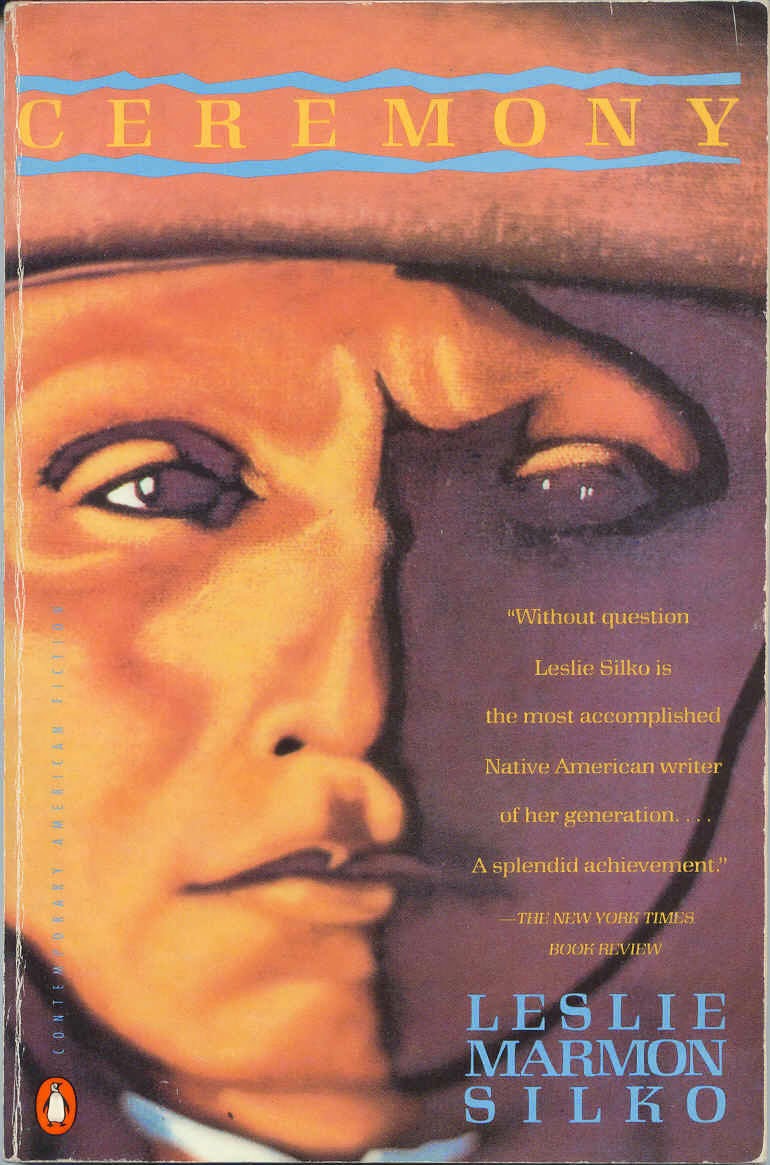 Leslie Marmon Silko – Silko’s novel Ceremony is
set just after World War II, and is about a Native veteran who returns from the
war to his hometown in
Leslie Marmon Silko – Silko’s novel Ceremony is
set just after World War II, and is about a Native veteran who returns from the
war to his hometown in 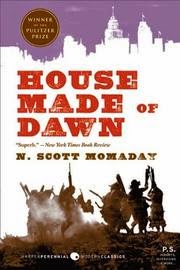 N. Scott Momaday – Probably best known for
his novel House Made Of Dawn, which
won the Pulitzer Prize in 1969. The story is similar to Silko’s book (though it preceded hers) about a returning veteran of World War II and his unsuccessful
attempts to deal with the war’s trauma. Again, the drug of choice is alcohol,
and the character knocks around his hometown for a while before making a
fateful decision and landing in jail in LA. He returns to his home after six
years, only surviving with the aid of a couple of friends, and begins the
process of reconnection with his people and their ways. It’s a powerful story
with indelible images (an albino Indian in a bizarre ceremony, a brutal attack that ends up on a lonely beach), and Momaday’s prose is patient and poetic (no surprise, since he
is also a poet). I also recommend another
novel by him from 1989, The Ancient Child.
N. Scott Momaday – Probably best known for
his novel House Made Of Dawn, which
won the Pulitzer Prize in 1969. The story is similar to Silko’s book (though it preceded hers) about a returning veteran of World War II and his unsuccessful
attempts to deal with the war’s trauma. Again, the drug of choice is alcohol,
and the character knocks around his hometown for a while before making a
fateful decision and landing in jail in LA. He returns to his home after six
years, only surviving with the aid of a couple of friends, and begins the
process of reconnection with his people and their ways. It’s a powerful story
with indelible images (an albino Indian in a bizarre ceremony, a brutal attack that ends up on a lonely beach), and Momaday’s prose is patient and poetic (no surprise, since he
is also a poet). I also recommend another
novel by him from 1989, The Ancient Child.
Louise Erdrich
– At this point, maybe the best known of Native writers besides Alexie, she has
many novels to her credit. I recently read Tracks,
which concerns the story of three Anishinaable families in Minnesota
Susan Power –
I’m currently reading her first novel, The
Grass Dancer, and enjoying it immensely. Her prose style is more spare and
matter-of-fact, with apt flourishes in spots. This novel is constructed as a
series of vignettes connected by the characters. It jumps around in time, but I’m
enjoying getting the background on those who have so far been introduced. There
is a heavy spiritual aspect to the work, and one of the main characters is an
older woman who regularly manipulates men through her “spells”. As with any
book I like, I’m eager to read the rest, but not trying to read it too quickly.
Like a good friend, you want it to linger for as long as possible.

Here you have the Native
authors and their works that have made an impact on me in the last couple of
years. I plan to read more of their books, plus continue looking for new
authors to discover. After finding so many of the more well-known authors on
the bestseller lists disappointing, it’s been great to find some work that I
can truly enjoy, without the self-conscious pretention baked in to so much of the
MFA set’s prose. As a bonus, maybe these stories can help start a discussion about
acknowledging and coming to terms with the barbaric and bloody past of the
founding of this country.
Saturday, June 7, 2014
The Scale of Memory
 |
| Colonial street level in New Castle |
I spent my first 11 years in New Castle ,
Delaware , a small town just south of Wilmington . It’s a town
rich in colonial history. To walk through its streets is literally to travel
back to that era. Many of the buildings from that time still stand, and are
still lived in by residents. When walking through the town, one is struck by
the different sense of scale. When I visited again back in 2002, after an
absence of two decades, I walked through the town, armed with an enlivened
sense of the colonial era in America .
I snapped pictures, which are lying in a box somewhere in the house. One
building in particular compelled my interest. There was a sign in front that
informed the passerby that it served as a tavern during those times. I stared
at the façade. It was red brick, with long windows, a two-storey affair. But
again, back to the scale. I noted how much smaller the doorway was compared to
modern domiciles. Most peculiar of all, if I had walked right up to the front
of house, it appeared that I could’ve reached up and easily touched the bottom
of the second storey window. It was almost as if I were confronted with a
massive dollhouse. I knew colonial men and women were smaller in stature, due
at least in part to a diet much lower in calories and nutrition than ours
today. But this building, and many others like it, looked as if it could’ve
been built for hobbits. I only wished that I could’ve toured the interior.
That was one form of time travel on my trip then. The other
form was more personal--staying with my cousins a few miles away from town. They
still lived in the apartment above the garage of my aunt and uncle’s house,
where they’d lived when we moved away back in the mid-70s. When I came to
visit, they let me stay in the main house, which was then occupied by their
oldest daughter. I stayed in the secondary bedroom. It was comfortable enough,
but immediately upon arriving, I was haunted by ghosts. All of those who had
inhabited the past I’d left behind, my memories of it like ancient insects
trapped in amber. So much of the setting looked the same that it was difficult
not to call them up in my mind. The stage was there, ridiculously intact, which
made their absence that much more keenly felt. I remember standing in the
kitchen, looking around, seeing myself and my aunt and uncle in their customary
places. All of us around the dinner table, amid the buzz of conversation. The
taste of my aunt’s wonderful dinners. The spot in the spare room where I played
with Christmas presents. I had an earache that year (what was it, ’74? ’75?).
The living room where I watched Phillies games when they were on, Harry Kalas
calling the play-by-play. That same room where, when it was time for us to go,
I would sneak up on my uncle, who had his face buried in the day’s paper. I
would punch the paper, brimming with evil mirth over his unfailing reaction of
surprise. Until one day he tired of it, and became visibly irritated. At that
point, I figured it was time for me to outgrow that stunt. Looking back, I’m
amazed at how patient and indulgent he was for a long time before that day. I
don’t think I could’ve equaled it.
They have a decent-sized property, and the back yard held
similar nostalgic inducements. I would spend hours there, batting a ball around
by myself, pretending I was hitting home runs in the bottom of the ninth.
Becoming my heroes at the time, who were Mike Schmidt, Larry Bowa, Greg
Luzinski, among others. The same yard where I would raptly gaze at the myriad
fireflies as they danced in the evening air of summer. As I walked out to the
yard on my return, I immediately found a familiar woolly bear caterpillar,
crawling along in the grass. There used to be more meadow backed by woods when
I was young. When I returned, it was long gone, replaced by housing tracts. The
area where my uncle had a garden was now someone else’s yard. The human
population bomb had exploded all over the ground of some of my happiest
memories.
I had taken a notebook down with me to do some writing. I
recorded how I felt at the time. I wrote that my aunt had died just a little
over a year before, but it felt like she’d been there the previous day and I’d
just missed her. I reported feeling “down and a little overwhelmed”, but
hopeful about reconnecting with everyone. It was a good trip in the end, with
some sense of coming full circle by the time I left, though it wasn’t without
some tension. I came down one evening, after 10, to find the kitchen table and
a chair tipped over. The house was silent and I saw no one else, though the
bedroom door was shut. My cousin and her boyfriend at the time must’ve had an
argument. I righted the table and chair, set everything back in its place. I
was a little mad that such an emotional stage for me had been, in a sense,
vandalized. It was my cousin’s house now though. The rest of us had only been
passing through, like brief gusts of wind, as my cousin was doing now. At some
point we would all be gone, as vanished as those colonial tavern-goers, and the
mental histories we cherished would be overwritten by others.
Tuesday, April 8, 2014
1964
Remember those days?
Fridays after work at the lounge
It was the summer after Kennedy died
I knew a Republican at the office
Who bragged he'd pulled the trigger
Coastal sun
Portholes behind the bar
Arguments over Clay and Liston
Sometimes women
Lips with a showroom shine
They listened, expressions like cats
When they took off their sunglasses
Soon they huddled together
Secret musings
Whispers, intake of breath
Covert glance toward the next table
The sea came in on the air
Falling from heaps of heat-loosened shells
Half open
Mouths robbed of conversation
We said little when eating
Staring blankly at white breakers
On a beach across the bay
Littered with colored rectangles
Province of wives, children
Husbands as aloof, crew-cut despots
The newspaper a barrier to the wind
Reading of writing in the sand
Washed by Asian surf
Painted wooden corners
Spider webs billowing in a breeze
Goldwater pushing us to the edge
A young girl disappears in a mushroom cloud
On the TV
Someone observes, "his cause is surely lost"
Prominent behind the counter
Milkshake machine, faded green Sunbeam
A fleshy hand twists the metal cup
Pours a chocolate dream straight up
Sweat beads on the steel
The meal is done, we stir to leave
The ex-ballplayer drops his keys
One of the girls, laughing, takes him home
The fins of the Buick slice the air
Leaving the place I give back one glance
I can see next week already there
Fridays after work at the lounge
It was the summer after Kennedy died
I knew a Republican at the office
Who bragged he'd pulled the trigger
Coastal sun
Portholes behind the bar
Arguments over Clay and Liston
Sometimes women
Lips with a showroom shine
They listened, expressions like cats
When they took off their sunglasses
Soon they huddled together
Secret musings
Whispers, intake of breath
Covert glance toward the next table
The sea came in on the air
Falling from heaps of heat-loosened shells
Half open
Mouths robbed of conversation
We said little when eating
Staring blankly at white breakers
On a beach across the bay
Littered with colored rectangles
Province of wives, children
Husbands as aloof, crew-cut despots
The newspaper a barrier to the wind
Reading of writing in the sand
Washed by Asian surf
Painted wooden corners
Spider webs billowing in a breeze
Goldwater pushing us to the edge
A young girl disappears in a mushroom cloud
On the TV
Someone observes, "his cause is surely lost"
Prominent behind the counter
Milkshake machine, faded green Sunbeam
A fleshy hand twists the metal cup
Pours a chocolate dream straight up
Sweat beads on the steel
The meal is done, we stir to leave
The ex-ballplayer drops his keys
One of the girls, laughing, takes him home
The fins of the Buick slice the air
Leaving the place I give back one glance
I can see next week already there
Subscribe to:
Posts (Atom)
-
0:10 I've always been a slow starter. It usually takes a decent force of will to get my legs pumping enough to exit the driveway. My...
-
 I'm a little later than usual this year, but it's time to recap the 2011 movies I saw. Usually I restrict it to what I saw in the th...
 -
This has been pushed ahead to the fall due Covid and the Olympics being postponed. Life has been discovered on Mars, and humanity's ...
