Saturday, September 7, 2019

The Trip to Washington DC


In August, I took my first trip to Washington DC. It was my first thought after getting home last year from a great visit to Gettysburg PA. "Where should I go next year?" The choice of Washington DC was made easier by the fact that it's a direct flight from our overlooked, medium-sized town. Easy to get to from here. I'd always wanted to go. I've talked to many who visited before, and often it was their senior trip in high school. My class went to the Poconos. I sat out that trip--my protest vote.

View from the Lincoln Memorial steps
Never have I heard more of a variety of languages and accents than in DC. There was a group of students from France (probably middle school age) passing on the left. There was a group from Sweden going the opposite direction. There was a family that spoke what sounded like an eastern European language. There were a few people with an African cadence. The Middle East. Asia. The multiplicity was dizzying. It gave me hope that, even though we have a brain-dead autocrat in office, the rest of the world still looks to the US as an ideal. I've known this, but never experienced it around myself in such a tangible fashion.

I saw most of the major monuments. I lingered on the steps of the Lincoln Memorial, trying to conjure up that day in 1963 when Dr. King spoke. It felt like I was on America's front step. People sat on the steps and milled in front, quietly taking it all in. There were signs that
asked for quiet as a sign of respect for the monuments. They were largely heeded. The view from the steps, across the reflecting pool through the World War II monument and on to the Washington Monument, can't help but inspire. The sordid part of this country's history is never far from my mind, but that spot made it recede for a little while. Here we were, ready once again to rise above it, like we did in 2008. Or will we? The racist and nationalist strains in American life are never far from the surface.

The Vietnam Veterans Memorial (notice: "Veterans", not "War") has always been transgressive as far as memorials go. There were the statues of three soldiers as you enter, but the main part is a black wall with the names of those who died during the long conflict. The wall descends slowly into the ground, evoking the quagmire that the war became. The names pile up as the wall lengthens and deepens towards its midsection. There were others there looking for names they knew. The earliest
year for names is 1959, the last 1975. Even I remember that last year, with the image of the Huey on the roof of the American embassy. All that time and effort, all those lives, only to end up in an ignominious bug-out from Saigon, many South Vietnamese begging to come along. Maybe things would've been different if the rationale for the war, the supposed attack in the Gulf of Tonkin on two destroyers, had never been invented in the first place.

SS-20 on the left; Minuteman on the right
I suffered museum fatigue by the end of the trip. There are so many. The two highlights were the Air and Space Museum, and the Museum of Natural History. The instantly recognizable icons of the early days of aviation, and the space race. A replica of the lunar lander greets you as you walk in, the actual lander still sitting forlornly on the moon. Its body insect-like and partly covered in gold-colored insulation. When cast mentally against the vast cold vacuum of space, it looks almost inadequate. Yet it succeeded. There are ICBMs, both US and Russian. There are the German vengeance weapons from World War II, the V-1 and V-2. The V-1 is small, basically an early drone, but one can draw a direct line between the V-2 and the later US Minuteman ICBM. Too much was learned from the losers in that war. Werner Von Braun, the German rocket designer responsible for Hitler's terror weapons, has his
V-2 rocket
fingerprints on both weapons.

I saw the dinosaurs in the Museum of Natural History. Tyrannosaurus Rex bathed in a lurid red glow. Stegosaurus and Triceratops and Diplodocus, all were once part of my plastic playset. Here were the actual bones, proof positive that these megafauna really did roam the same lands we now walk. For all their fearsome reputation, it only took one asteroid to wipe them out and open the way for mammals. No one at the exhibits seemed to be thinking that the same cataclysmic event could happen to us. Despite our big brains, we are not favored. In fact, because of our big brains, we stand an arguably better chance of doing ourselves in. Who needs an asteroid when you've got rampant consumption of fossil fuels, the product of ancient decomposing plant matter? Thanks to us, the Cretaceous period may have the last laugh yet.


Monday, September 2, 2019

So...What's Next?

I took much of August off as far as writing goes. Finished the most recent story in early July. Seemed like a good time to think about another attempt at a novel. I have a brief outline written that feels good. There's a lot of detail to fill in, but I don't think I need to wait for that. My instinct is to start and see how it goes.

It will be a challenge. I have four (maybe five) failed attempts behind me. But with some publishing success, the chances of completing a draft have to be better. My last attempt was begun about 16 years ago, and I'm a better writer now. That should count for something.

Still, it's a very different beast from a short story. Short fiction has suited my limited free time, but a novel will eat much of that up. It's much easier to sit down to a short tale after a full day of work rather than a long-form narrative, where every so often you must find the thread in order to continue. That means re-reading from a certain point in the story, or even from the beginning.

Time has become precious again. At my age, I feel the pressing need to start this next attempt. If it crashes and burns, there's always another try. But my determination to make this one work is strong. Hopefully, it's enough.

Monday, August 5, 2019

Time Machine

Biking is my surrogate for running, ruled out by a calf muscle which refuses to heal, but it's also my time machine.

On the bike, I can outrun the years, slip back into being 15 again, the last time I rode regularly, and show the world and myself that I'm foolishly defying many of the conditions of being in my fifties. The good years are dwindling fast, so gliding along on the bike makes me feel like I'm outside of the relentless march of time. That maybe I'm stealing some of my youth back.


Thursday, May 9, 2019

Wednesday, February 6, 2019

The Natural State

Putting these pith instructions here so I don't forget.

Resting in the natural state does not mean that you cannot think about things or work. The idea is to rest in the natural state and think at the same time. If you can do that, you can think things through and work but there are no painful or sharp feelings.
Thrangu Rinpoche

Wednesday, January 30, 2019

The Trip to Gettysburg

In August of 2018, I finally had a solid week off of work. Rather than spend time around the house wondering what to do next, or get started on that ever-elusive novel, I decided to take that trip to Gettysburg I'd been talking to people about for the last few years.

I went online and reserved a hotel room, not too expensive but a notch or two above dirt cheap. I went to Hertz and rented a car for the journey. My vehicle was fast closing in on 9 years old and had broken the 100,000 mile barrier. I felt that a 500 mile trip might be asking too much of it at this point in its life. I had indicated a preference for a sedan, but when the day came I was greeted with a new, black Toyota 4-Runner. They were out of sedans and I was given a free upgrade. After about 30 minutes of fumbling around with this new type of vehicle, I was finally on my way.

Rochester was cloudy as I set off, but the further south I went, the more the skies cleared. Soon it was warm in the cabin, so I turned on the a/c. Southern tier hills replaced the flat landscape near Lake Ontario, and I crossed into Pennsylvania, the first time in many years. I was on route 15 south, and recalled that the last time I was on this route was when my mother and I moved to western New York from Delaware in summer, 1976. At that time though, we were traveling north. Still, it all looked very familiar. For a while on that stretch of road, I was that morose boy again, on the cusp of adolescence, wondering why my life could be so easily turned upside down at the whim of adults. My protests counted for nothing at the time. I stopped at a gas station in Williamsport that was startingly familiar to me. Route 15 is a split route, however, with both directions on separate roads that run parallel. We wouldn't have stopped here going north. I must've remembered it from a later trip back to Delaware in 1982, which was taken by my grandmother, my cousin, and me.

I knifed through the rugged peaks of the Allegheny Mountains, shrouded in patchy storm clouds. Fat rain drops spattered my windshield for a few minutes, before the sun dramatically reappeared. It was a Tuesday, so traffic was nominal. The road was winding, now climbing, now descending, through the terrain. There were small towns now and then. I passed one as I edged closer to Harrisburg. I don't recall its name, but I could recall passing by it 42 years before. It didn't look as if it had changed one bit in all that time, except that its population had likely decreased. There was a large restaurant that looked like it had just closed down for good.

Wending around Harrisburg, I sped down the last miles to my destination. The land flattened out again and the road surface lightened to concrete. Farmland on both sides. I had left 15 before the state capital, and was now in virgin territory. I hit the exit for Gettysburg and slowly entered town, staying alert for my hotel on the right.

The hotel turned out to be a good choice. It was close enough to be within walking distance of the town center. The road it was on was incredibly busy. The line of cars and, especially truck traffic, was almost unceasing. Fortunately, it quieted down at night.

I had no real plan to explore the battlefield. I was unprepared for its sprawl. There are really several battlefields that make up the whole. I went to the national park the day after I arrived and took the bus tour. It lasts two hours, but we only stopped three times to listen to the guide explain what happened at the site. Though worth taking, I knew I would have to drive back through to explore areas we had passed by, and others we didn't even see.

View of the Devil's Den from Little Round Top
This is how I got most of my pictures. Some areas deeply resonated because I'd  heard of them. There was the Devil's Den, a cluster of large boulders that confederates used to hide in and which stood at the base of a well-defended union position. Snipers from both sides took shots at each other as the lines shifted. I could almost smell the sweat of desperation of soldiers from both sides as they peered down their rifle sights, looking for targets. The area overlooking the Den was Little Round Top, a position taken by union troops just as the confederates were storming its summit. It's optimal high ground in the area and was coveted by both sides.
View of Little Round Top from the Devil's Den


There was the Peach Orchard, and a farmhouse that stands there to this day. You can still see the hole created by the southern cannonball that pierced the brick wall and created
The Peach Orchard farmhouse's cannonball hole
havoc inside. The farmhouse was the headquarters for a union general, who was wounded by another cannon shot not far outside the structure.


Most solemn though was a site in the midst of Pickett's charge, the fateful attack that decided the outcome. It's called the Angle, often referred to by troops at the time as the Bloody Angle. Here, confederate troops momentarily broke through the union line. Withering artillery and rifle fire from the union units to the rear of this line successfully beat back the intrusion, however. It took a grievous toll on the rebels, and ultimately broke the back of Lee's advance. I stood for several minutes at the site of the carnage. With a summer breeze rustling the leaves of the lone tree there, and the other tourists a ways off, I read the plaque mounted there, and imagined the suffering that took place in that small space. Emotion welled up, and I said a short prayer for those who had fallen or were wounded. The war seemed to be condensed at that spot, all of its pain and lingering consequences balanced precariously on the point of the Angle. Reflecting on the state of the country now, I tried not to think it was all for nothing.
View from the union side of the Angle


I could have spent days there, tracking over the rest of the battlegrounds, finding every stone unit marker that littered the landscape. Sites where officers took their last breath; the starting lines for charges; artillery emplacements. I didn't find them all, but I found enough that it brought the war all the way from 1863 to my present. I spent three days there, and they were all similar to those sweltering July days of the battle. When I got home, I felt like I could understand the country a little bit better, though that doesn't mean I'm still as confident in our ability to live up to the ideals we profess to have.


Monday, December 31, 2018

My List of the Best 2018 Movies


Black Panther

I loved the comic in the '70s. It was great to see him come to the screen this year. Though his costume has been modified to the point that he seems to be just another Iron Man, I had to roll with it and accept the changes since I had read the book. A cool soundtrack and a group of strong women just as powerful as the titular hero made for a satisfying debut. I was caught up in giving the Wakanda forever salute as well.


Avengers: Infinity War

Someone asked me how I felt about this film, and my response was, "I'm just glad I was alive to see it." Sounds grandiose, I know, but it juggled so many of my childhood heroes with such a deft touch. It also subverted the usual supervillain trope by making Thanos's aim something that is an unresolved, and seemingly unresolvable, problem in the real world. I felt sympathy stirring in my heart for the big guy. It all ends with a truly epic battle and a lump in the throat.

Leave No Trace

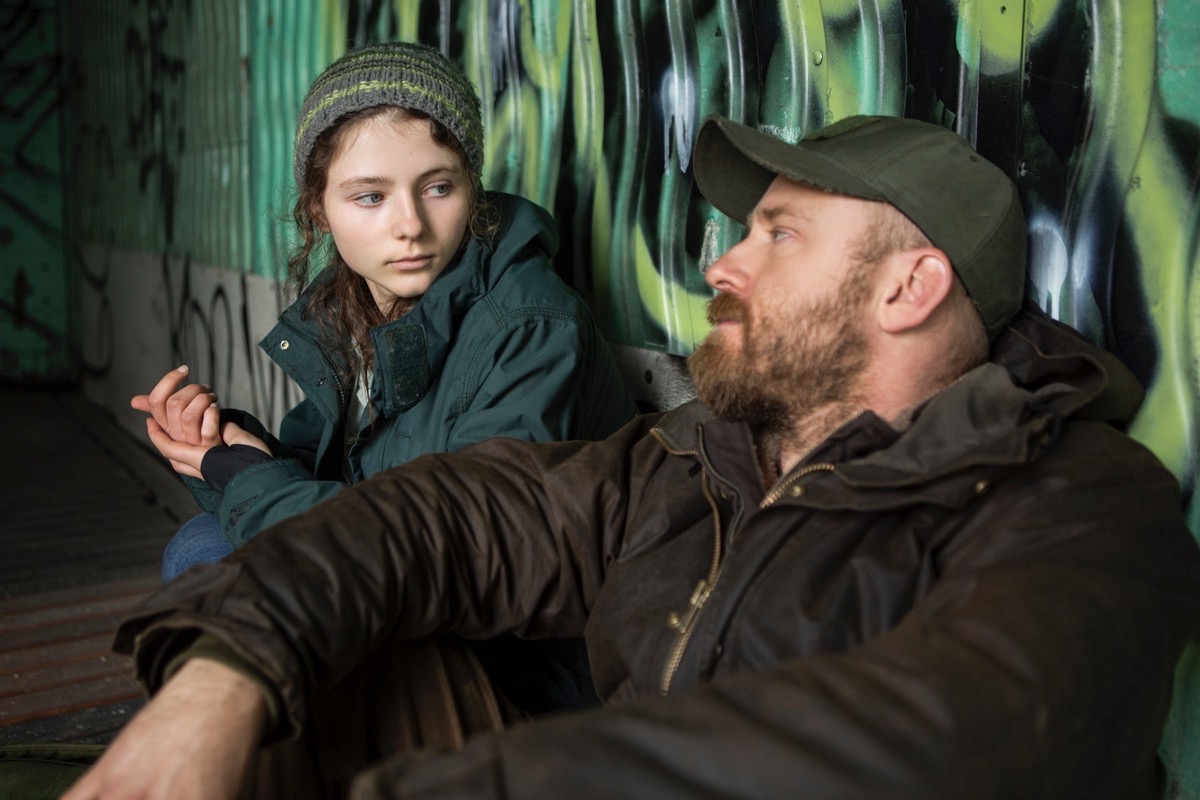
A dad with PTSD and his daughter choose life off the grid, and struggle when they are caught and forced by society to rejoin the mainstream. The daughter warms to it, but the dad has trouble adjusting. The film shows us that there are pitfalls on either side, and that maybe the choice is not so clear. By the end, I wasn't sure who had it better. Good performances by Ben Foster and Thomasin McKenzie.

Zama

A tale of Argentina during the colonial era. Zama is a magistrate in a small village who yearns for an assignment in a larger town with more opportunities. Promises to send his request to the King are always delayed. He assaults a colleague and is exiled to a remote area among the native population, with one of whom he has had a child. To escape this situation, he joins a party that is sent out to the countryside to find a notorious bandit, who apparently was not executed as originally thought. There he meets with the consequences of colonial abuse and oppression. The incessant bird calls serve as the main soundtrack, almost to the point of distraction, but the atmosphere is palpable. The air is haunted by a dark history, not to mention the spirits of the oppressed.

Blackkklansman

My favorite film of the year. Spike Lee's adaptation of a true story about a black law officer who penetrates a Colorado chapter of the KKK, with the help of one of his white colleagues. The story takes place in the early '70s, when it was difficult enough for a black person to lead an everyday life without being pushed down. The payoff at the end, with Ron Stallworth telling off David Duke over the phone, was one of the most satisfying moments of the year.

In This Corner of the World

My favorite anime this year. A tale of Japan during World War II on the home front. Suzu, a
young woman with artistic talent, loses her drawing hand to an American bomb. She struggles with the loss, and the increasing bombing raids by B-29s as the progresses. We get a real feel for what it was like to be on the receiving end of such power. In the end, the film shows us that our enemy is as human as we are, and that war is ultimately a human failure. Though one side may win, it's a life of peace that loses, and war just continues.

The Florida Project

The days of a resilient young girl and her flawed mother as they find shelter in a somewhat run down hotel. The child roams the area with her friends, begging money for ice cream and getting into trouble. Her mother doesn't have a steady job and resorts to selling perfume at first, then her body. It's all set in the fever dream of tourist Florida, with its Disney-inspired flights of commerce and its lush green spaces behind the artificial facade. You get lost in this atmosphere until Brooklynn's luck runs out. The final scene represents Brooklynn's ultimate escape.

Fahrenheit 11/9

Michael Moore strikes again. Yes, it's about the election, but it's also about how we got there. Clinton and Obama are not spared in his film, she for her ignorance during the campaign of swing states Michigan, Pennsylvania, and Wisconsin (which all went to Trump), and he for his bungled response to the Flint water crisis. I was particularly shocked at how Flint was used by the US military for simulated urban war games. Buildings were bombed from above, and troops and tanks flooded the city. You can hardly believe it's happening here, but Mr. Moore shows us again why we need him, and why he's the true American populist.


State of the Art

  I'm thinking of renaming this blog "Blog For No One" since it gets no attention whatsoever. As  no one reads it, I suppose i...